

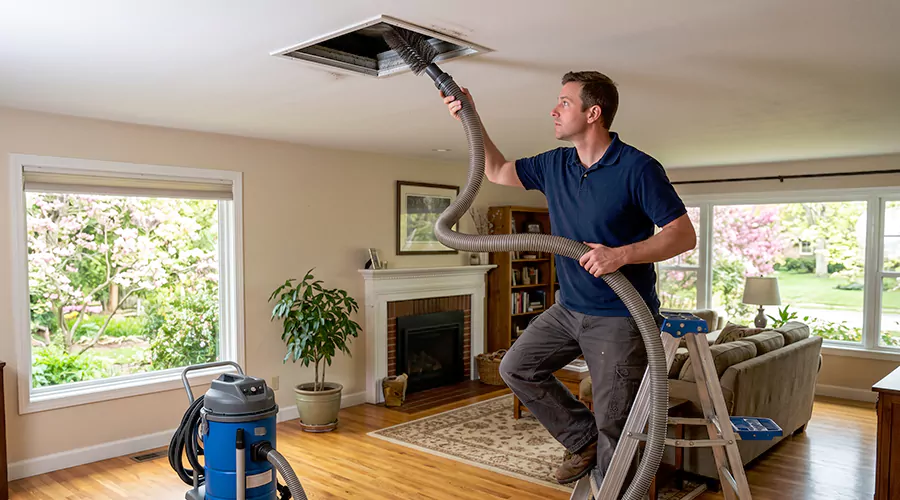
Air duct cleaning costs an average of approximately $390 in the United States in 2026, with many homeowners paying between $271 and $509. More extensive whole-house HVAC cleaning may cost $450 to $1,000, depending on what is included and how much ductwork needs attention. The final price is influenced by home size, the number of supply and return vents, duct accessibility, and the condition of the heating and cooling system.
Air ducts distribute conditioned air throughout a home, while return ducts carry indoor air back to the equipment. Dust can gradually accumulate inside these passages, particularly when filters do not fit properly or construction debris enters the system. However, ordinary deposits do not automatically mean that professional cleaning is necessary.
The Environmental Protection Agency does not recommend routine air duct cleaning simply because a certain amount of time has passed. Cleaning may be appropriate when substantial visible mold is confirmed, pests are present, or excessive debris is being released through supply registers. A homeowner should establish the condition of the system before paying for cleaning.
Understanding current prices and the different methods companies use to calculate their charges makes it easier to compare estimates. A low advertised price may cover only vent openings, while a more detailed quote may include the supply and return ducts and other accessible HVAC components. The cleaning scope matters as much as the total amount charged.
What Is the Average Air Duct Cleaning Cost in 2026?
The 2026 national average reported by Angi is approximately $390, based on more than 21,000 completed projects. Its commonly reported range is $271 to $509. HomeGuide reports a broader $450 to $1,000 range for whole-house duct cleaning, reflecting differences in project size and scope.
These figures are not necessarily contradictory because contractors include different tasks in their packages. A limited cleaning of a smaller system can cost less than a detailed whole-system service involving several returns and HVAC components. The estimate should explain which portions of the system will actually be cleaned.
| Cleaning Scope | Typical 2026 U.S. Cost |
|---|---|
| Lower-cost residential cleaning projects | Around $271 |
| National average reported by Angi | Approximately $390 |
| Common residential project range | 271–509 |
| Broader whole-house cleaning estimates | 450–1,000 |
| Larger homes or more involved projects | $1,000 or more |
The higher end is more likely when the house has multiple HVAC systems or the ductwork is difficult to access. Extensive contamination may also require additional evaluation before cleaning can proceed. Mold remediation and pest removal are separate problems that should not automatically be included within an ordinary dust-cleaning price.
A reliable estimate should identify the number of systems and the work included. Comparing only the national average with a contractor's total can be misleading when the proposed services are not the same.
How Much Does Air Duct Cleaning Cost by House Size?
Some cleaning companies calculate prices using the total square footage of a home. Published estimates commonly range from approximately $0.15 to $0.40 per square foot, depending on the pricing survey and cleaning scope. This method assumes that larger homes generally contain more ductwork and take longer to clean.
Square-foot pricing is a useful starting point, but it does not measure the actual length or complexity of every duct system. A small home with two separate HVAC units may require more work than a larger home served by one accessible system. The number of vents and condition of the equipment should therefore be considered alongside floor area.
The following table illustrates a price model of $0.20 to $0.40 per square foot.
| Home Size | Example Cleaning Cost |
|---|---|
| 1,000 square feet | 200–400 |
| 1,200 square feet | 240–480 |
| 1,500 square feet | 300–600 |
| 2,000 square feet | 400–800 |
| 2,500 square feet | 500–1,000 |
| 3,000 square feet | 600–1,200 |
These are calculations based on one published square-foot pricing range rather than guaranteed contractor quotes. Some companies charge a minimum rate that produces a higher total for a small home. Others price the service based on the number of vents or HVAC systems instead.
A homeowner should also ask whether the price includes cleaning return ducts and the equipment cabinet. A quote based only on floor area may not specify which components receive attention.
How Much Does Air Duct Cleaning Cost per Vent?
Air duct cleaning can cost approximately $25 to $50 per supply vent in 2026. Return vents may cost around $40 to $75 each in some pricing models because they can connect to larger duct passages. However, many contractors charge for the whole system instead of treating every opening as a separate service.
The number of vents can provide a reasonable estimate when the home contains one HVAC system with a conventional duct layout. A higher vent count usually means more branches to access and clean. However, the number of visible grilles does not always reveal the complexity of concealed ductwork.
| Number of Vents | Example Cost at 25–50 Each |
|---|---|
| 8 vents | 200–400 |
| 10 vents | 250–500 |
| 12 vents | 300–600 |
| 16 vents | 400–800 |
| 20 vents | 500–1,000 |
| 24 vents | 600–1,200 |
This table uses a general per-vent calculation and does not separately account for higher-priced return ducts or equipment cleaning. Actual quotes may include all openings within a flat-rate package. Some companies may also charge differently for unusually large returns.
Count the supply registers and return grilles before requesting estimates. Then ask whether the contractor's per-vent charge covers the duct behind each opening or only the visible grille. This distinction is important because cleaning a cover is not equivalent to removing accumulated material from the connected duct.
What Factors Affect Air Duct Cleaning Prices?
Several factors influence the amount a contractor charges for air duct cleaning. The most important are the size and layout of the system and how easily its components can be reached. The material used to construct the ducts also affects the cleaning method.
Number of HVAC Systems
A home may have one central heating and cooling system or several separate systems serving different areas. Each system may contain its own supply and return ducts. Cleaning two complete systems generally requires more setup and labor than cleaning one.
Contractors should identify the equipment being serviced before providing a final price. A second air handler may create an additional charge even when the home has a relatively small number of vents. The estimate should state whether all HVAC systems are included.
Duct Material
Sheet metal ducts can often tolerate suitable mechanical cleaning methods when structurally sound. Flexible ducts and internally insulated ductwork require greater care because aggressive brushes can damage liners or insulation. The cleaning provider should identify the materials before selecting equipment.
A system containing several duct types may require different tools for different sections. Cleaning more delicate materials can take additional time. Wet or moldy fiberglass insulation presents a separate issue because it generally needs replacement instead of ordinary cleaning.
Duct Accessibility
Ductwork installed in an unfinished basement may be easier to access than material concealed above ceilings or inside walls. Contractors may need to use existing service openings or create suitable access points. The amount of labor increases when the system contains numerous difficult-to-reach sections.
Any new access openings should be sealed and restored after cleaning. The cost of this work should be included in the estimate where applicable. A quote that does not account for necessary access may underestimate the final project.
Level of Dust and Debris
A duct system containing substantial construction debris may require more cleaning than one with light household dust. Heavy deposits can take additional time to loosen and collect. However, the contractor should provide evidence of the condition rather than assume severe contamination because the system is old.
Normal dust accumulation does not automatically justify extensive cleaning. The EPA notes that much of the material inside ducts may remain attached to the surfaces rather than enter occupied rooms. The need for cleaning should be based on actual conditions.
Local Labor Rates
Labor costs vary between cities and regions. Published 2026 pricing estimates commonly place duct cleaning labor around $90 to $125 per hour for some projects. Companies may also use flat rates that account for their crew size and specialized equipment.
A project requiring several hours of work can cost more when the ducts are difficult to access. However, a higher hourly rate does not necessarily mean a higher total. The completed scope and amount of time required determine the value of the estimate.
Contamination Requiring Specialized Work
Pest activity or suspected mold can change the type of work needed. Ordinary duct cleaning is not the same as pest remediation or mold removal. Contaminated materials may require specialized controls and replacement rather than more aggressive brushing.
If mold is suspected, the moisture source should be identified before cleaning is approved. A dark deposit on a vent cover is not proof that the duct contains mold. The contractor should explain what evidence supports a remediation recommendation.
What Is Included in a Professional Air Duct Cleaning Service?
A proper HVAC cleaning service should have a clearly defined scope covering the affected components. Cleaning only the visible supply registers may leave debris inside the connected ducts or equipment. The appropriate work depends on the system's condition and why cleaning is being performed.
Professional cleaning commonly uses source-removal methods. Specialized brushes or air tools loosen deposited material while suitable vacuum equipment collects it. The system is maintained under controlled negative pressure so debris is not released into occupied rooms.
| HVAC Component | Typical Cleaning Consideration |
|---|---|
| Supply ducts | Remove appropriate accumulated deposits |
| Return ducts | Remove dust and debris from return passage |
| Supply registers | Clean accessible grille surfaces |
| Return grilles | Remove visible deposits |
| Supply and return plenums | Inspect and clean as required by scope |
| Blower assembly | Evaluate and clean when included |
| Air handler cabinet | Address accessible contamination |
| Cooling coil and drain pan | Inspect and clean as appropriate |
| HVAC filter | Inspect and replace when necessary |
Not every advertised duct cleaning package includes the blower or cooling coil. Some providers charge separately for those components. A written estimate should specify the cleaning boundary so homeowners know what will be completed.
The EPA advises that contaminated HVAC systems should be cleaned as a whole, with attention to components that could cause recontamination. The provider should also protect the home and restore any openings created for access.
What Additional Costs Can Air Duct Cleaning Involve?
Additional charges may apply when a contractor performs services outside the ordinary duct-cleaning scope. Video inspection or dryer vent cleaning are common examples. Equipment repairs and specialized contamination treatment are different projects and may cost considerably more.
| Additional Service | Indicative 2026 U.S. Cost |
|---|---|
| Video inspection of ductwork | 70–130 |
| Basic HVAC inspection | 100–300 in some projects |
| Furnace-related cleaning service | 60–150 |
| Dryer vent cleaning when bundled | Around $100 |
| Standalone dryer vent cleaning | 100–170 in some estimates |
| Air duct repairs | 200–800 for some repairs |
| Mold remediation | Separate assessment and estimate |
| Pest removal | Separate pest-control and cleaning scope |
These figures describe optional or separate services and should not automatically be added to the duct-cleaning price. An inspection may already be included in the initial visit. Some packages also include certain accessible equipment components.
Be cautious when a provider recommends disinfectants or chemical fogging without identifying a specific reason. Ordinary dust does not automatically require a chemical treatment. Any proposed product must be suitable for its intended HVAC application and used according to its labeling.
Does Air Duct Cleaning Cost More for Older Homes?
Older homes can be more expensive to clean when the ductwork is difficult to access or contains materials requiring special precautions. Some systems have internal fiberglass liners or duct board that cannot tolerate aggressive cleaning. Others may contain loose joints or deteriorating insulation that should be repaired before cleaning.
However, age alone does not prove that ducts are dirty or need replacement. A sound older system may contain only light dust deposits. The actual condition matters more than the installation date.
Older insulation also deserves caution because some materials may contain asbestos. Suspected asbestos-containing material should not be disturbed by ordinary duct cleaning equipment. A qualified assessment is necessary before cleaning begins when potentially hazardous materials are present.
How Long Does Air Duct Cleaning Take?
Residential duct cleaning may take approximately three to eight hours, depending on the size and complexity of the system. Large homes and systems with substantial deposits can take longer. A crew with appropriate equipment may complete a straightforward system more quickly than a complicated installation requiring several access points.
The time required should reflect the work performed rather than a fixed number of minutes per vent. Setting up proper containment and vacuum collection takes time. Cleaning the connected components and inspecting the results are also part of the service.
A brief visit that only vacuums visible grilles is not equivalent to a full-system cleaning. Homeowners should ask how the contractor plans to reach and clean the supply and return passages. The final result matters more than whether the appointment matches a particular time estimate.
Is Air Duct Cleaning Worth the Cost?
Air duct cleaning can be worthwhile when substantial contamination has been documented. The EPA suggests considering cleaning when there is significant visible mold in suitable hard-surface ducts or other HVAC components, evidence of vermin infestation, or excessive dust and debris being released through supply registers. These situations provide a more specific reason for cleaning than the presence of ordinary household dust.
The EPA also states that duct cleaning has not been shown to prevent health problems. Research has not conclusively demonstrated that routine duct cleaning reduces household dust or improves health outcomes. Homeowners should therefore avoid purchasing cleaning solely because of unsupported claims about medical benefits.
Cleaning may address a specific source of contamination, but it does not prevent new dust from entering the system. Filtration and moisture control remain important after any cleaning. A professionally cleaned duct can become dirty again when the underlying cause is not addressed.
How Often Should You Pay for Air Duct Cleaning?
There is no universal requirement to clean residential air ducts every year. The EPA recommends cleaning as needed rather than on a fixed routine schedule. Inspection is more useful when specific symptoms or contamination are present.
A home may require cleaning after construction debris enters the ductwork or after a documented pest problem is resolved. Significant moisture-related contamination can also require remediation. These situations should be evaluated individually rather than automatically assigned a three-year or five-year interval.
Regular HVAC maintenance is different from duct cleaning. Filter replacement and cleaning condensate drainage areas may be necessary even when the air ducts do not need cleaning. Keeping the system maintained helps reduce the likelihood of future contamination.
Can You Save Money by Cleaning Air Ducts Yourself?
Homeowners can clean accessible vent covers and replace HVAC filters without paying for a complete duct service. These tasks help remove visible household dust from ordinary maintenance areas. However, they do not provide the controlled cleaning of concealed ducts and connected equipment.
A household vacuum generally cannot reach the full duct system or maintain controlled collection during aggressive internal brushing. Improper cleaning may release deposits into occupied rooms or damage flexible liners. The risk is greater when the system contains unfamiliar insulation or suspected contamination.
DIY maintenance can reduce unnecessary service calls when the only issue is dust on removable grilles. When extensive internal debris is present, a qualified contractor is better equipped to inspect and clean the affected areas.
How Can You Avoid Air Duct Cleaning Scams?
Extremely low advertised prices should be examined carefully because they may not cover the full HVAC system. A promotional offer might include only a limited number of vent openings. Additional charges may then be introduced after the contractor arrives.
The EPA recommends caution with exaggerated health claims and companies that claim EPA certification. The agency does not certify or endorse duct cleaning companies. Contractors should demonstrate their qualifications and explain the cleaning method rather than rely on official-sounding marketing.
Before hiring a company, ask these questions:
- Does the quote include supply and return ductwork?
- How many HVAC systems are covered?
- Which air handler components are included?
- What cleaning equipment and debris collection methods will be used?
- How will flexible or internally insulated ducts be protected?
- Will any necessary access openings be restored?
- Is an inspection included before cleaning?
- What conditions would create additional charges?
- Can the company document the actual contamination?
- How will the completed work be checked?
Written estimates make comparisons easier. The cheapest quote is not necessarily the best value if it excludes important system components. Likewise, the most expensive package is not automatically necessary when the ducts contain only ordinary deposits.
What Should You Do Before Booking Air Duct Cleaning?
Start by checking whether there is a documented reason for cleaning. Inspect accessible grilles and note any unusual debris being released from supply openings. A dusty return cover alone does not establish that the full duct system is contaminated.
Ask a qualified HVAC professional to evaluate the condition when the source of the problem is uncertain. If there is evidence of moisture or pests, correct those conditions before ordinary cleaning proceeds. Cleaning without fixing the cause may result in repeated contamination.
Request written quotes describing the same scope. Count the supply and return vents and identify how many HVAC systems serve the property. These details help contractors estimate the work accurately and reduce unexpected charges.
Conclusion
Air duct cleaning costs approximately $390 on average in 2026, while broader whole-house services may range from $450 to $1,000. Prices depend on the number of systems and vents, duct accessibility, and the work included. Cleaning should address documented contamination rather than follow an arbitrary annual schedule. Comparing detailed written quotes helps prevent unnecessary charges. Before booking, inspect the system and confirm whether a complete cleaning is actually warranted.